
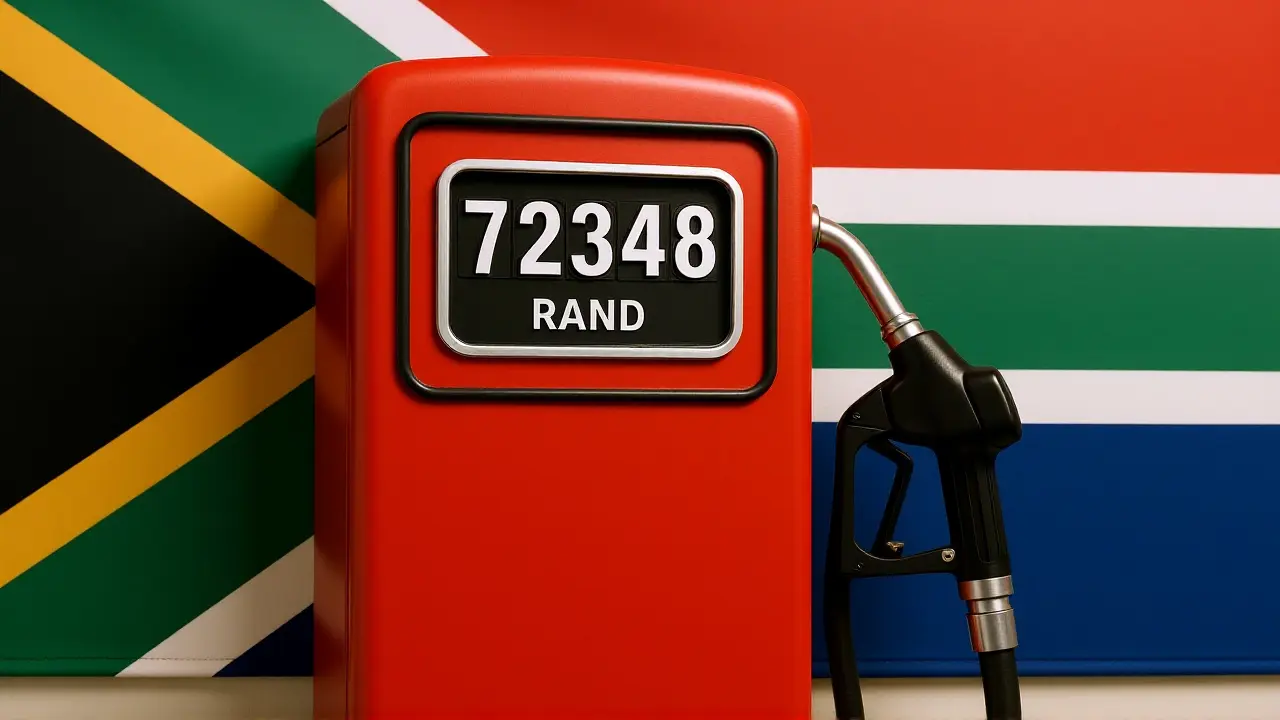
When Statistics South Africa released its latest Consumer Price Index data on 18 June 2026, the headline number sent a jolt through the financial community: inflation had climbed to 4.5% year-on-year in May. That’s up from 4.0% in April and 3.1% just two months prior. The culprit? A relentless surge in fuel costs that has left motorists and businesses alike reeling.
Here’s the thing about inflation—it doesn’t happen in a vacuum. It’s the cumulative effect of everyday price hikes, but when one category spikes this hard, it drags everything else up with it. In this case, petrol and diesel prices didn’t just tick upward; they skyrocketed, pushing the national inflation rate to its highest point since July of last year. For ordinary South Africans, this isn’t just a statistic. It’s the extra cash needed at the pump, the higher cost of groceries transported by truck, and the tightening of household budgets across the board.
The Fuel Factor: Why Prices Are Soaring
The numbers tell a stark story. According to the data, petrol prices rose by 24.8% over the past year, while diesel prices surged by an even more staggering 53.8%. These aren’t marginal adjustments. They’re structural shifts in the cost of energy that ripple through the entire economy.
But wait—there’s more. The increase wasn’t gradual. In April 2026 alone, petrol prices jumped by three rand per litre, hitting a record high. Then, in late May, another hike hit: petrol went up by R1.43 per litre following the reinstatement of the General Fuel Levy. Diesel users saw changes too, though the exact figures were less transparent. This double-whammy of levies and market pressures created a perfect storm for inflation.
Patrick Kelly, Chief Director for Price Statistics at Statistics South Africa, explained the dynamics in an interview with journalist Mandy Wiener. “The annual change in core indices remained steady at 3.7%, but headline inflation was pulled up sharply by petroleum-related products,” he noted. Those products include not just transport fuel, but also fertilisers, petrochemicals, feedstock, and bituminous materials—all seeing record price increases.
Context Bridge: From March to May
To understand how quickly things escalated, look at the timeline. In March 2026, inflation was a manageable 3.1%. By April, it had crept to 4.0%. And then, in May, it leaped to 4.5%. Each step was driven largely by fuel. This rapid acceleration places the current rate at the very top edge of the central bank’s target range of 3–6%. While still within bounds, being at the upper limit raises concerns about future monetary policy decisions.
Interestingly, this isn’t the first time fuel has played such a dominant role. Historical context shows that petrol price shocks have been recurring features of South Africa’s economic landscape. For instance, a past midnight price hike of 25 cents per litre—from 63.5c to 88.5c—was equivalent to a R4.94 increase in today’s money, causing drivers to flock to stations before the change took effect. Today’s multi-rand hikes are far more severe in real terms.
Multiple Perspectives: Who Is Feeling the Heat?
For commuters, the impact is immediate and personal. Every trip to work, every school run, every weekend outing now costs significantly more. Small business owners who rely on trucks for deliveries are facing squeezed margins. Logistics companies are passing these costs on to retailers, which means higher shelf prices for everything from fresh produce to electronics.
Experts warn that if fuel prices remain elevated, secondary effects will kick in. Transport costs influence food prices, construction materials, and manufacturing inputs. If diesel stays high, agricultural production becomes more expensive, potentially leading to higher food inflation down the line. It’s a chain reaction that starts at the pump.
On the other hand, some analysts argue that core inflation—the measure excluding volatile items like fuel and food—remained stable at 3.7%. This suggests that underlying price pressures might not be as severe as the headline figure implies. However, ignoring the pain felt by consumers due to fuel costs would be a mistake. People don’t pay bills based on ‘core’ metrics; they pay based on what they see at the checkout.
Broader Impact and Expert Analysis
The ripple effects extend beyond individual wallets. High inflation erodes purchasing power, reducing consumer spending capacity. This can slow economic growth, especially in a country already grappling with unemployment and inequality. Businesses may hesitate to invest if input costs are unpredictable. Workers may demand higher wages to keep pace with living costs, potentially triggering a wage-price spiral.
Moreover, the return of the General Fuel Levy signals a shift in government revenue strategy. While it helps plug budget gaps, it also acts as a direct tax on mobility and commerce. Critics argue that taxing essential fuels during a period of economic fragility penalizes the most vulnerable. Supporters counter that the levy is temporary and necessary for infrastructure maintenance. The debate underscores the political sensitivity of energy pricing.
What’s Next: Monitoring the Trend
All eyes are now on the next CPI release. Will fuel prices stabilize? Or will further hikes push inflation closer to 5% or beyond? The central bank will be watching closely. If inflation persists at the upper end of its target band, policymakers may consider raising interest rates to cool demand—a move that could burden homeowners with variable-rate bonds and small businesses with loan repayments.
Meanwhile, consumers should prepare for continued volatility. Budgeting for higher transport costs is no longer optional; it’s essential. Monitoring monthly fuel announcements and planning travel accordingly can help mitigate some of the shock. But ultimately, the solution lies in broader energy policy reforms that reduce dependency on imported oil and promote sustainable alternatives.
Background Deep Dive: A History of Price Shocks
South Africa’s relationship with fuel prices has always been fraught. As a net importer of refined petroleum, the country is exposed to global oil markets and exchange rate fluctuations. When the rand weakens against the dollar, fuel gets more expensive. When global supply chains tighten, so do prices. Add in domestic factors like refinery outages or regulatory changes, and you get the kind of spikes we’re seeing now.
In previous years, similar surges led to public outcry and government intervention. Subsidies were introduced, then removed. Levies were adjusted. Yet the fundamental vulnerability remains. Until there is greater investment in local refining capacity and renewable energy infrastructure, South Africans will continue to feel the pinch whenever global markets shift.
Frequently Asked Questions
Why did inflation rise so sharply in May 2026?
Inflation rose primarily due to dramatic increases in fuel prices. Petrol prices jumped 24.8% year-on-year, while diesel surged 53.8%. Additional monthly hikes, including a R1.43 per litre increase tied to the General Fuel Levy, pushed overall consumer prices higher, lifting the annual inflation rate from 4.0% in April to 4.5% in May.
Who is responsible for publishing inflation data in South Africa?
Statistics South Africa (Stats SA) is the official body responsible for compiling and releasing the Consumer Price Index (CPI). Patrick Kelly, Chief Director for Price Statistics at Stats SA, provided detailed commentary on the May figures, confirming that fuel costs were the main driver behind the recent inflationary spike.
How does this affect everyday consumers?
Higher fuel prices directly increase transportation costs for individuals and businesses. This leads to higher prices for goods delivered by road, including groceries, clothing, and household items. Commuters face larger fuel bills, while logistics firms pass on increased operational costs, resulting in reduced purchasing power for households nationwide.
Is this inflation rate considered dangerous?
At 4.5%, inflation sits at the upper end of the South African Reserve Bank’s target range of 3–6%. While not immediately alarming, sustained pressure at this level could prompt the central bank to raise interest rates. Higher rates would make borrowing more expensive, potentially slowing economic activity and affecting mortgage holders and small businesses.
What caused the sudden spike in diesel prices?
Diesel prices surged 53.8% year-on-year due to a combination of global oil market volatility, currency depreciation, and domestic supply constraints. The reinstatement of the General Fuel Levy added further pressure. Diesel is critical for freight and agriculture, making its price movements particularly impactful on the broader economy.
Will fuel prices continue to rise?
Future fuel prices depend on global crude oil trends, exchange rates, and government policy. With the General Fuel Levy back in place and ongoing geopolitical tensions affecting supply, short-term volatility is likely. Consumers should expect fluctuating prices until broader energy sector reforms reduce reliance on imported fuels.





Comments
Raja Meena
It is absolutely morally bankrupt how these policies are designed to crush the working class while the elite sip champagne. The government has a duty of care that they are blatantly ignoring, choosing instead to line their own pockets with levies on essential goods like fuel. It makes me sick to my stomach knowing that families are struggling just to keep their cars running for work.
Pooja Kiran
Let's not get carried away with the emotional rhetoric here, shall we? The macroeconomic indicators suggest that this is merely a transitory shock within the broader CPI basket. Core inflation remains sticky but stable at 3.7%, which implies that the underlying price pressures are not as severe as the headline figure suggests. People need to understand the difference between volatile components and structural inflationary trends before crying wolf.
Gaurav sharma
You sound like you've never had to pay for petrol in your life, really naive take there. The 'structural shifts' mentioned in the article are basically code for 'we messed up energy policy for decades.' It’s fascinating how experts love to use big words like 'transitory' while regular people are getting screwed over by a 53% hike in diesel. It’s not just numbers, it’s survival.
Megha Khairnar
I think we can all agree that this situation is incredibly difficult for everyone involved. From a philosophical standpoint, it highlights our collective vulnerability to global supply chains. Perhaps we should focus on community support systems rather than blaming individuals or governments alone. We are all connected in this economic web, and hurting one part hurts the whole.
Twinkle Vijaywargiya
Indeed! It is crucial that we approach this with empathy and understanding! Many small business owners are facing squeezed margins! They are not trying to exploit anyone! They are simply passing on costs! We should support local businesses during these tough times! Let us be kind to each other!
Swetha Sivakumar
Yeah, no pressure, but budgeting for higher transport costs is pretty much mandatory now if you want to stay afloat. I’ve started planning my trips way more carefully, combining errands into one run. It’s annoying, but it helps mitigate some of the shock. Just gotta adapt, I guess.
diksha gupta
There is always a silver lining, even in fuel crises. Maybe this will finally push the government to invest seriously in renewable energy infrastructure. Solar and wind could change everything for South Africa in the long run. We have so much potential waiting to be unlocked.
Sai Krishna Manduva
The concept of 'inflation' is somewhat illusory when one considers the real value of money. If the currency itself is depreciating against the dollar, then the fuel price hike is merely a reflection of deeper monetary failures. It is not the fuel that is expensive; it is our purchasing power that has evaporated. A classic case of misdiagnosis by mainstream economists.
Siddharth SRS
One must acknowledge the profound gravity of the current economic landscape. The resurgence of the General Fuel Levy represents a significant fiscal maneuver that cannot be dismissed lightly. It serves as a stark reminder of the state's reliance on regressive taxation methods to plug budgetary deficits. This phenomenon underscores the delicate balance between revenue generation and social welfare, a dichotomy that has plagued policymakers for centuries. The implications for future monetary policy are indeed substantial and warrant careful consideration by all stakeholders involved in the economic discourse.
Anoop Sherlekar
Let’s keep pushing forward! 💪 Every challenge is an opportunity to grow stronger. Don’t let these prices break your spirit. Stay positive and find ways to save! You got this! 🚀
Navya Anish
This is exactly what happens when a nation loses its sovereignty and relies on imported oil. It is pathetic that we are letting foreign markets dictate our daily lives. We need to stand firm and demand self-sufficiency immediately. Enough is enough!
Subramanian Raman
I wonder if there are any historical parallels to this situation? 😊 It seems like a cycle that repeats itself every few years. Curious to hear from others who have lived through previous spikes. How did you cope back then?
Shreyanshu Singh
the whole thing is a total mess man. stats sa releases data and everyone panics but nothing changes. same old same old. why do we even bother reading these reports if the outcome is always the same? feels like a joke honestly
Sohni Bhatt
It is truly disheartening to observe the lack of strategic foresight in our national leadership. The reinstatement of the levy is a clear indicator of fiscal irresponsibility that disproportionately affects the lower and middle classes. One cannot help but feel a sense of disdain for those who continue to defend such measures under the guise of 'infrastructure maintenance.' It is a blatant exploitation of the populace, and it speaks volumes about the moral decay of our political institutions. We deserve better than this constant erosion of our hard-earned income.
Prashant Sharma
Actually, the argument that the levy is 'temporary' is a convenient fiction used to placate the masses. In reality, it sets a precedent for future tax hikes. The core inflation rate being stable is irrelevant to the person standing at the pump. It is a classic example of out-of-touch economic analysis failing to address the visceral reality of consumer pain.
Mike Gill
i totally get where u r coming from. its really tough right now. hope ur holding up okay. sending good vibes ur way. dont forget to take breaks and look after urslef too. we r all in this together kinda deal
Suresh Kumar
The silence of the majority is deafening. While the pundits debate core vs. headline inflation, the quiet suffering continues. It is a slow bleed, unnoticed until it is too late. I watch from the sidelines, observing the gradual decline of purchasing power, wondering when the tipping point will arrive.
Jay Patel
🔥🔥🔥 Wake up people! The matrix is tightening its grip! These fuel hikes are not accidents; they are calculated moves to control mobility and commerce. The 'experts' are blind to the bigger picture. Only the enlightened see the truth behind the numbers. Stay sharp! 👁️🗨️💸