
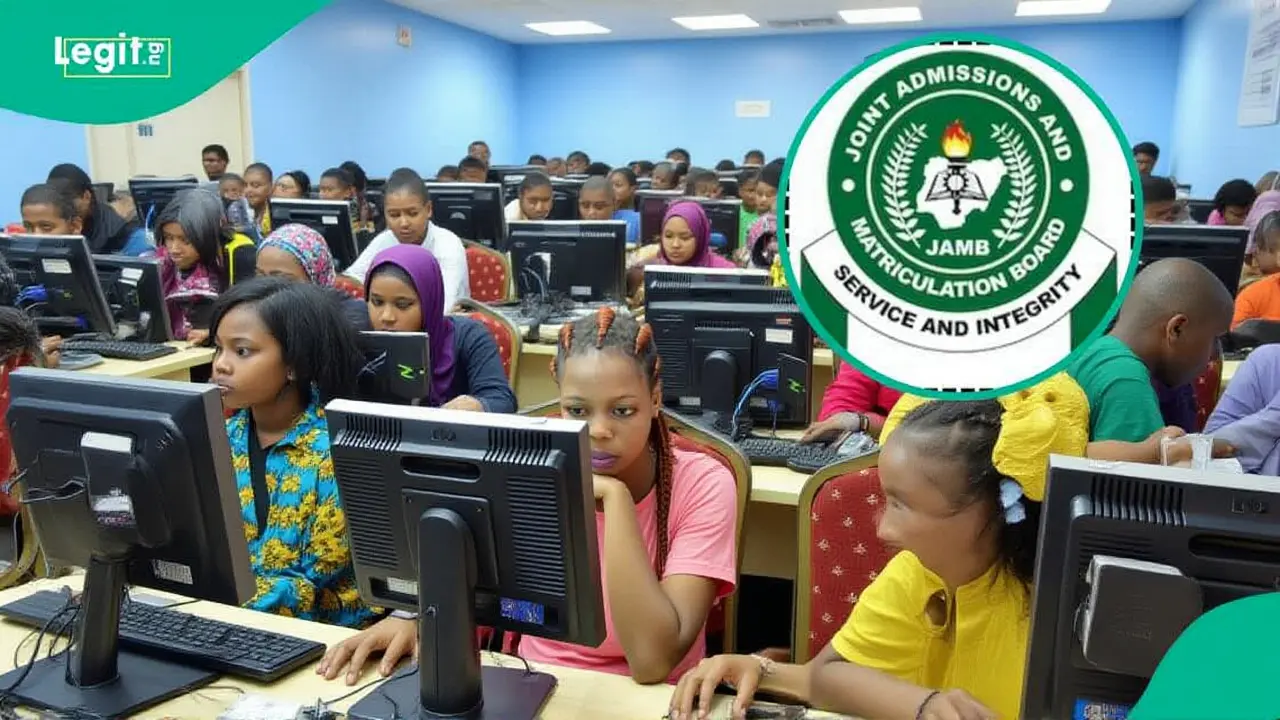
For thousands of Nigerian students who already suffered technical nightmares during their university entrance exams, the news couldn't have come at a worse time. Joint Admissions and Matriculation Board (JAMB) has effectively locked out some candidates from the much-needed mop-up examination, despite those same students reporting severe glitches during their original sittings.
The frustration is palpable across social media platforms as affected students discover their status marked "not eligible" for the remedial exam. One desperate candidate, speaking to Legit.ng, summed up the collective anxiety with a heartbreaking plea: "This is my last hope." It's not just about missing a test; it's about the potential collapse of years of academic preparation and dreams of higher education.
The Scale of the Technical Failure
To understand why this exclusion feels so unjust, you have to look at the sheer magnitude of the initial disaster. The 2025 Unified Tertiary Matriculation Examination (UTME)Nigeria was supposed to be a smooth transition into tertiary institutions. Instead, it became a case study in systemic failure.
During a press conference in Abuja on Wednesday, Ishaq Oloyede, Registrar of JAMB, admitted that a technical error had compromised the integrity of results. We're talking about 379,997 candidates whose scores were affected. That’s nearly 380,000 young lives thrown into uncertainty.
The glitch wasn't evenly distributed either. It hit hardest in specific regions:
- Lagos State: 65 centers were impacted, affecting over 200,000 candidates.
- Southeast Zone: 92 centers across five states saw failures, impacting approximately 173,387 candidates.
Oloyede didn't shy away from the blame. He accepted personal responsibility, stating he held himself accountable for the negligence of the service provider. "Despite extensive system upgrades, trial runs, and simulations," he explained, "a technical fault still occurred." The root cause? Technical personnel failed to update delivery servers in the Lagos and Southeast zones before releasing the results. An oversight, sure—but one with massive consequences.
Why Are Some Candidates Being Left Behind?
Here’s the twist that has everyone angry. JAMB promised a fix. They announced that all affected candidates would get a chance to reset their exam at no extra cost. Slots were even secured in partnership with an entity referred to only as "WK" (likely Wexin or a similar testing partner).
But when students logged in to check their eligibility for the mop-up exam, many found themselves blocked. The system simply said: "Not Eligible."
This creates a bizarre situation. On one hand, JAMB admits the system broke for hundreds of thousands. On the other, their own portal tells individual students who experienced glitches that they can't participate in the rescue mission. It’s like being told the bridge is fixed, but then finding out your name isn't on the list to cross it.
Candidates are reporting that while they clearly faced issues—crashes, unanswered questions, connectivity drops—their profiles weren't flagged correctly in the database for the re-sit. Without that flag, they’re invisible to the remediation process.
The Human Cost of Bureaucratic Errors
Behind every statistic is a student staring at a screen, heart pounding. For many, the UTME is the single most important exam of their young lives. It determines access to prestigious universities like the University of Lagos, University of Ibadan, or Obafemi Awolowo University.
The emotional toll is evident in the online outcry. Students aren't just asking for answers; they're begging for fairness. "We paid our fees," one student wrote on X (formerly Twitter). "We showed up. We tried. Now we're being told it doesn't count because of a server error we didn't cause?"
Experts in educational administration argue that transparency is key here. When large-scale digital exams fail, the fallback mechanism must be inclusive, not exclusive. If the system failed to record your attempt properly, the burden shouldn't fall on the student to prove they were there. The institution should assume good faith until proven otherwise.
What Happens Next?
As of now, there is no clear timeline for resolving these exclusions. JAMB has appealed for understanding and pledged to improve future examinations, but vague promises don't help a student whose admission window is closing fast.
Stakeholders are urging JAMB to:
- Manually review cases where candidates report glitches but are marked ineligible.
- Provide a direct appeal channel via phone or email, not just automated portals.
- Release a detailed list of which specific errors qualify for the mop-up.
Until then, thousands of students remain in limbo. The mop-up exam is meant to be a safety net. For those excluded, it feels more like a trapdoor.
Frequently Asked Questions
Who is affected by the JAMB mop-up exam exclusion?
Candidates who experienced technical glitches during the 2025 UTME but are marked "not eligible" in the JAMB portal for the remedial exam. This primarily impacts students in Lagos and the Southeast zone, though reports suggest others nationwide may be affected if their glitch reports weren't processed correctly.
Why did JAMB exclude these candidates?
The exact reason isn't fully clear, but it appears to be a data synchronization issue. While JAMB acknowledged 379,997 affected candidates generally, the specific database flagging individuals for the free re-sit seems to have missed some students who reported glitches. The service provider's failure to update servers likely contributed to incomplete records.
Is the mop-up exam free for affected candidates?
Yes. JAMB Registrar Ishaq Oloyede confirmed that all officially recognized affected candidates can reset their exam at no extra cost. However, the current controversy is whether candidates are being correctly identified as "affected" in the system.
What should excluded candidates do now?
Candidates should document their glitch experiences (screenshots, center logs) and contact JAMB support through official channels. Social media pressure has been effective, so sharing verified stories publicly may also prompt faster administrative reviews. Keep checking your dashboard daily for status updates.
How many centers were affected by the technical error?
A total of 157 centers nationwide were affected. Specifically, 65 centers in Lagos State and 92 centers across five Southeast states experienced the server delivery failures that compromised the results of nearly 380,000 candidates.





Comments
Prashant Sharma
It is fascinating how the masses immediately assume incompetence rather than considering the complex geopolitical and economic pressures that force such institutions to cut corners. The 'glitch' is merely a symptom of a deeper structural rot in educational bureaucracies worldwide, where efficiency is sacrificed for political optics. One must question whether these students truly understand the value of rigorous selection processes or if they are merely entitled consumers demanding instant gratification.
Mike Gill
i totally get why everyone is so mad right now it really sucks when you do everything right and then tech fails on you man i hope they fix this soon because these kids have worked hard for years and its not fair to let them down like this 😔
Suresh Kumar
The silence of the affected candidates speaks louder than their protests. In the void between expectation and reality, we find the true nature of systemic failure. It is not merely a technical error; it is an existential crisis for those who placed their faith in a broken machine. We observe from the shadows as the gears grind against human potential.
Jay Patel
Oh please, spare me the tears 🙄 These students should have known better than to rely on a government body with zero accountability. It’s not a glitch; it’s a filter. Only the strong survive in this jungle, and crying about server updates won’t change your destiny. Wake up and smell the coffee ☕️📉
Pranav Gopal
We need to come together as a community to support these students regardless of where they are from. Education is a universal right and no one should be left behind due to administrative errors. Let us offer our help and resources to ensure that every candidate has a fair chance at success without judgment or bias.
कमल कमल
Let us be clear about what is happening here because the narrative being pushed by the media is completely skewed and designed to manipulate public opinion into blaming the victims instead of the perpetrators of this grand scheme which is nothing short of a conspiracy against the youth of the nation who are trying to rise above their circumstances but are being held back by corrupt systems that benefit only a few elite individuals who control the servers and the data and the future of millions of lives. 🇮🇳
harsh gupta
I wouldn't be surprised if this was all staged to reduce the number of eligible candidates for certain prestigious universities that are overcrowded. The 'technical fault' is too convenient, don't you think? They want to weed out the weak links before they even start. Typical manipulation by the powers that be.
Mukesh Katira
It is imperative that we uphold the highest standards of moral integrity in our response to this situation. While the emotions run high, we must remain steadfast in our commitment to justice and fairness for all parties involved. The system may fail, but our conscience must not. We must demand transparency and accountability from those in power.
Roop Kaur
The algorithmic bias embedded within the JAMB portal is clearly targeting specific demographic clusters based on regional server load metrics, creating a false negative feedback loop for eligibility verification protocols. This isn't just a bug; it's a systemic exclusion mechanism disguised as a technical oversight, leveraging simple user interface constraints to mask complex discriminatory data handling practices.
Ankita Bajaj
Hey guys let's keep the vibes positive! 💪 I know it's tough but we can make this work together. Share your stories and support each other because we are stronger when we stand united. You've got this and we believe in you! ✨
Manish gupta
Wow, look at all these people acting like the world is ending over a computer error. Get a grip. Life is full of glitches and you just deal with it. If you can't handle a little setback now, how will you survive the real world? Pathetic.
Sanjay Kumar
Life is a journey filled with unexpected obstacles, and sometimes the road gets blocked by things beyond our control. But remember, it's not the obstacle itself that defines us, but how we choose to navigate around it. Stay focused on your goals and keep moving forward with grace and determination.
Gaurav Jangid
Oh my gosh!!! Can you believe this absolute disaster?! 😱 It’s literally heartbreaking!! I’m shaking with rage right now!! How dare they treat these brilliant minds like this??!! It’s unjust!! It’s cruel!! It’s unforgivable!! We need action NOW!!! 🔥💔
Ghanshyam Gohel
As an observer of this chaotic situation, I feel compelled to point out the sheer absurdity of the bureaucratic negligence displayed here. It is quite aggressive to ignore the plight of thousands of students who have followed every rule. We must hold these officials accountable for their gross misconduct and lack of empathy towards the youth.
Nathan Lemon
From a cultural perspective, this incident highlights the deep-seated issues within institutional frameworks that prioritize procedure over human welfare. It is essential that we approach this matter with dignity and respect for all stakeholders involved, ensuring that the voices of the marginalized are heard and addressed appropriately.
Abhijit Pawar
This is unacceptable. Fix it now. No excuses.
lavanya tolati
i hear you all and it is really sad to see what is happening to these students education is so important and no one deserves to miss out because of a mistake made by others lets hope for a better outcome soon