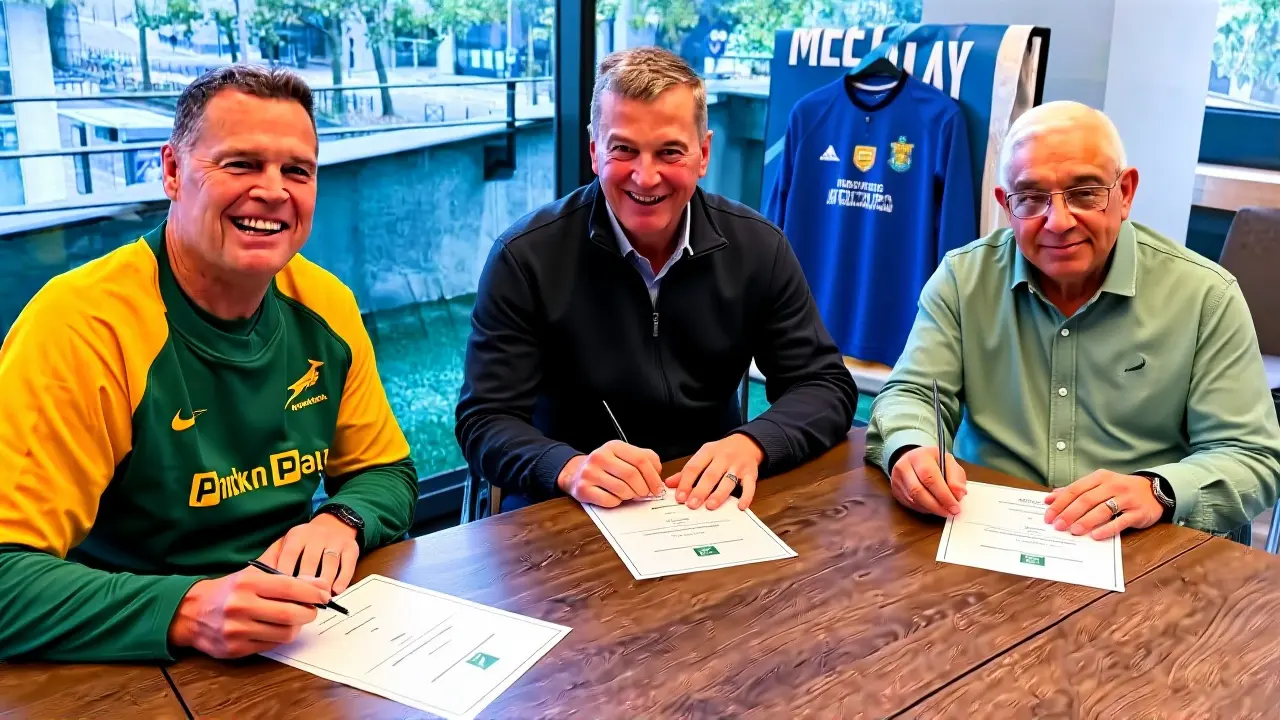
It’s official. The man who turned the Springboks into global rugby superstars isn’t going anywhere anytime soon. On Friday, December 5, 2025, SA Rugby announced a massive four-year contract extension for head coach Rassie Erasmus, Head Coach of South Africa National Rugby Team. This deal locks him in until 2031, securing his leadership through two future Rugby World Cups.
Here’s the thing: this isn’t just another routine renewal. It’s a statement of intent. By extending Erasmus’ tenure through the 2031 Rugby World CupUnited States, SA Rugby is betting big on continuity. They want a dynasty, not just a winning team. And with Erasmus now contracted for six years total, the message to players, sponsors, and rivals is clear: stability is the new strategy.
A Dynasty Built on Continuity
The announcement came from Mark Alexander, President of SA Rugby, who addressed the governing body’s general assembly. He didn’t mince words about why this move matters. After the triumphant November internationals of 2025, where the Boks showcased their dominance, the writing was on the wall. Erasmus had proven he could deliver trophies, but more importantly, he built a culture.
But wait—there’s a catch that made or broke this deal. Reports indicate that negotiations heated up because Erasmus had one non-negotiable demand: keep his coaching staff intact. He believes the secret sauce isn’t just his tactical genius, but the collective brainpower of his technical team. "The success and continuity of the Springboks depend entirely on keeping our world-class technical team together," sources close to the talks suggested. It’s a bold ask, but SA Rugby agreed. Why? Because the numbers don’t lie. The trophies, the tries, the global respect—it all points to a formula that works.
This extension aligns Erasmus’ contract with two full World Cup cycles: the 2027 tournament in Australia and the 2031 event in the USA. Most coaches get lucky if they survive one cycle. Erasmus is planning for two. That’s unprecedented in modern international rugby.
The Etzebeth Shadow
While the celebration over Erasmus’ contract was underway, a darker cloud hung over the squad. Eben Etzebeth, Lock for Sharks and the Springboks, received a 12-week ban for an incident during the Springboks’ 73-0 thrashing of Wales in Cardiff. The South African lock, 34, was sent off after match officials reviewed footage showing him gouging the eye of Wales flanker Alex Mann.
An independent disciplinary panel deemed the act "intentional." Initially, they looked at an 18-week suspension. However, citing mitigating factors—including Etzebeth’s previous clean record—they reduced it to 12 weeks. He’ll be back on the pitch by March 27, 2026. For context, Etzebeth is the most-capped Springbok player in history with 141 appearances. Losing him for three months hurts, but it’s a manageable blow compared to losing your head coach.
Oddly enough, these two stories—one of long-term security, the other of short-term punishment—highlight the dual nature of elite sport. You need vision to win wars, but discipline to survive battles. Erasmus has the vision secured. Now he needs his players to stay out of trouble.
Why This Matters for Global Rugby
Let’s step back and look at the bigger picture. International rugby is fragmented. Coaches jump ship every few years. Nations struggle to build identity. By locking in Erasmus until 2031, South Africa is doing what few others dare: playing the long game.
Compare this to the instability seen in other top nations. England, France, New Zealand—all have faced coaching churn recently. South Africa is opting for consistency. The hope is that this stability will translate into sustained excellence, making the Springboks the team to beat for the next decade. It’s a risky bet, sure. But when you’ve won back-to-back World Cups under the same leader, risk looks a lot like confidence.
The financial implications are significant too. Securing a coach of Erasmus’ caliber requires substantial investment. But consider the return on investment: global branding, sponsorship deals, and ticket sales for the 2031 USA World Cup. If the Boks remain competitive, the economic benefits for SA Rugby will be enormous.
What’s Next?
So, what does this mean for fans? Expect the same aggressive, physical style that defined the 2023 victory. Expect less experimentation and more refinement. Erasmus knows his system; now he has time to perfect it.
Watch for how the coaching staff evolves. Will new faces join? Or will the core group remain untouched? The answer will define the next era of Springbok rugby. Also, keep an eye on Etzebeth’s return. Can he regain his form after a three-month hiatus? His presence in the second row is vital for the scrum and lineout.
Finally, mark your calendars. The 2027 World Cup in Australia will be the first major test of this extended era. If the Springboks reach the final, the 2031 extension will be hailed as a masterstroke. If they falter, questions will arise about whether tying up a coach for six years stifles innovation. Only time will tell.
Frequently Asked Questions
How long is Rassie Erasmus' new contract?
Rassie Erasmus has signed a four-year extension to his existing deal, bringing his total contractual period to six years. This means he is committed to SA Rugby until 2031, covering both the 2027 and 2031 Rugby World Cups.
Why did SA Rugby extend Erasmus' contract so far into the future?
SA Rugby aims to build a "dynasty" rather than just a winning team. By securing Erasmus through two World Cup cycles, they prioritize stability and continuity. Erasmus insisted on retaining his current coaching staff, believing their collective expertise is key to sustained success.
When will Eben Etzebeth be eligible to play again?
Eben Etzebeth is serving a 12-week ban for an intentional foul during the match against Wales. An independent panel reduced the initial 18-week sentence due to mitigating factors. He is scheduled to complete his suspension and return to play on March 27, 2026.
Which World Cups will Erasmus coach?
Under his extended contract, Rassie Erasmus will lead the Springboks at the 2027 Rugby World Cup in Australia and the 2031 Rugby World Cup in the United States. This ensures his strategic vision guides the team through two major tournaments.
Did Erasmus have conditions for his contract extension?
Yes. Reports indicate that a critical condition of the negotiation was Erasmus' ability to retain his current, highly effective coaching staff. He argued that the team's success relies on the continuity of his entire technical team, not just his own role.